
Édouard Manet and the Republican Struggles: Politics in a Modern Painter
- Art d'Histoire
- May 28
- 4 min read

The French nineteenth century was characterised by profound institutional instability. As a reminder, between 1847 and 1880, France experienced four regimes: a monarchical regime under Louis-Philippe, an imperial one under Napoleon III, and two republics.
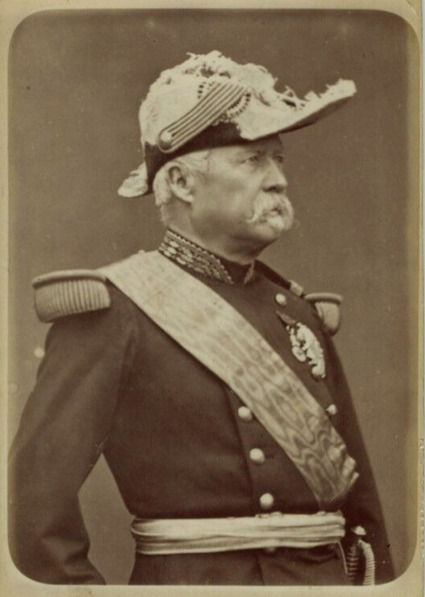
However, this republic was established on blurred foundations since, until 1875, it lacked a constitutional basis; the majority in Parliament and the President of the Republic, Mac-Mahon, were monarchists, and remained so until 1877–79.
In this tumult, was Édouard Manet politically engaged? Does this engagement appear in his works?

A Network of Republican Influences Built from Youth
The artist's political awakening long preceded his fame. In the spring of 1849, Manet was engaged as a merchant marine apprentice and travelled to Rio de Janeiro. In his correspondence, he expressed his mistrust of Louis-Napoleon Bonaparte, fearing the man would betray the ideals of the young Second Republic. He was right: the coup d'état of December 2, 1851, was to lead, a year later, to the establishment of the Second Empire.
This political consciousness was stimulated by a republican family environment. The parental home served as a salon for opponents of the regime, regularly hosting dissenting figures at its table, such as the deputy Émile Ollivier.
During a Venetian stay in 1853, the artist, accompanied by his brother Eugène and Ollivier, stayed with a connection of Carlo Cattaneo, a tutelary figure of the Italian insurrection.
Through his brother Joseph and his cousin Jules de Jouy, who then employed a young beginning lawyer named Léon Gambetta, the painter was introduced very early to the young guard of the opposition. Parisian cafés, particularly the Café de Londres in the late 1860s, as well as the literary salon of Commandant Hippolyte Lejosne, served as bastions where great friendships were forged with political figures such as Antonin Proust or Eugène Spuller.
The painter's involvement went beyond mere sociability: during the decisive institutional crisis of 1877, he transformed his studio into a logistical headquarters to actively support Spuller's electoral campaign.
The Franco-Prussian War and the Commune
The tragic and insurrectionary period of 1871 tested the painter, who remained in Paris. During the Franco-Prussian War, Manet enlisted in the Republican Guard and served, ironically, under the orders of the painter Meissonier.
He rejected the violence of the Paris Commune, condemning with the greatest severity the execution of military officials by the insurgents, whom he perceived as vile murderers, while feeling a deep aversion to the bloody repression orchestrated by the regular Versailles troops under the orders of Patrice de Mac-Mahon.
Pictorial work then became the direct outlet for this civic tearing. His composition, titled The Barricade, immortalises the summary executions perpetrated by the Versailles army. In terms of iconography, this Parisian street scene appropriates the structure of an earlier canvas, The Execution of Maximilian, which had already played on the resemblance between the uniforms of the Mexican libertadores and those of the soldiers of the Second Empire.
At the same time, the family sphere engaged politically in a process of pacification, his brother formally joining the ranks of the Republican Union League for the Rights of Paris alongside the young Georges Clemenceau.
The Censorship of his Polichinelle-Mac-Mahon

In 1874, the painter produced an ambitious series of fifteen hundred prints illustrating the figure of Polichinelle, intended for the subscribers of a major republican daily. The lithographic technique—a printing process allowing the mass reproduction of a drawing traced on a stone—offered the opportunity for large-scale distribution. This enterprise was stopped by government authorities, who ordered the total destruction of the prints by guillotine cutter.
Why ban a simple drawing of Polichinelle? Under the harmless features of the character from the Commedia dell'arte repertoire, the artist hid a scathing portrait of the President of the Republic, the conservative and monarchist Mac-Mahon. The appearance of Polichinelle subtly borrowed the features of the Head of State; the heavy club echoed the pejorative nickname for Mac-Mahon, known as "Marshal Baton," widely disseminated by his detractors. Theodore Reff proposes a parallel between the bodily attitude of Manet's Polichinelle and the rigid bearing of a senior officer in the middle of a troop review.
The Portraits of Clemenceau, Rochefort, and Gambetta


With the definitive consolidation of the republican regime at the threshold of the following decade, Manet painted several portraits of historic republicans; those of Georges Clemenceau and Henri Rochefort were painted between 1879 and 1881, which academic Philip Nord presents as true militant declarations. Furthermore, Manet had painted Rochefort's escape from prison in 1874, a shameful adventure for France. History also records that only the unavailability of Léon Gambetta, unable to submit to the long hours of sitting necessary for the painter, prevented the creation of a portrait of the famous republican orator.
Immobilised at Bellevue at the end of his life, the painter welcomed the political decision to amnesty the former Communards with fervour. On a sheet of paper addressed to Isabelle Lemonnier and dated July 14, Manet traced in watercolour two poles carrying crossed tricolour banners, accompanied by a few words celebrating national reconciliation.
Manet was a republican and a patriot. He joined the National Guard for the defence of Paris rather than fleeing like Cézanne into the Provençal scrubland or like Monet to London. He rejected extremes—the exactions of the Communards as much as those of the Versailles army—and publicly displayed his support for republicans when the republic remained in the hands of monarchists tempted by yet another restoration.
This blog relies on the primary source anthology sheets provided by Art d’Histoire Académie:
Plus all those inserted as links in the blog above
You can also view our traditional, free-access videos:
The Art d’Histoire Académie platform specialises in primary sources and digitised archives covering the artistic period from 1850 to 1910.
It offers clear, structured interactive videos accompanied by a library of over a thousand anthology sheets, comprising 10,000 explained and contextualised primary sources that can be viewed in their original format.
Whether you are preparing for an exam, a lecture, a guided tour, a conference, an exhibition, or a publication, Art d’Histoire Académie is here to support you. The labyrinth of archives simply becomes what it ought to be for any passionate researcher: a source of inspiration and a space for fulfilment.


