
Was Camille Pissarro an Anarchist? The Secret Politics of the Impressionist Dean

Camille Pissarro is often remembered by art history as the gentle "Dean of Impressionism," a benevolent father figure with a long white beard who nurtured the talents of Cézanne and Gauguin. However, the archives reveal a more radical figure concealed behind the easel. Far from being a mere painter of rural idylls, Pissarro was also a committed anarchist who viewed the Impressionist group not just as an aesthetic circle, but as a revolutionary trade union modelled on the working class.
The Bakers' Union Model
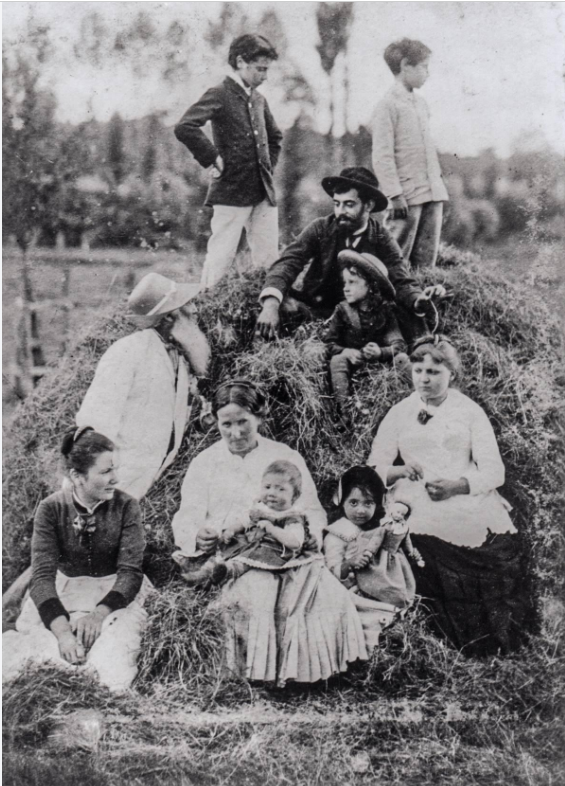
When the "Impressionists" were first organizing in 1873, the structure of their association was a matter of intense political debate. Pissarro, who embodied the revolutionary spirit of the "old guard of '48," insisted that the artists should not form a traditional salon but a cooperative association. In a move that shocked his bourgeois peers, he drafted the statutes of the group based directly on the model of the Pontoise bakers' trade union.
For Pissarro, the independent artists were "producers" rather than elite creators. He envisioned their society as a syndicate designed to defend the rights of independent workers against the exploitation of merchants and the dictatorial Salon jury behind the academic protection of the State. This radical approach was supported by his close allies; along with Monet and Mary Cassatt, Pissarro pushed the group to radicalize their support for the ideals of the republican left. This aligned with the call of the journalist Paul Alexis, who had urged artists in L'Avenir National to unite against the "injustices of the Salon," arguing that from a social point of view, "there are no longer any workers or artists, only producers".
The Roots of Rebellion

Pissarro’s radicalism was deeply rooted in his personal history and multicultural background. Born into a family scattered between the West Indies, Paris, and London, and speaking Spanish, English, and French, he was "intrinsically hostile to expressions of nationalism". His atheism and humanism provided fertile ground for the anarchist philosophy he would later adopt.
His specific introduction to anarchist thought came through Édouard Béliard, a fellow painter and Freemason whom he met in the mid-1860s. It was Béliard who introduced Pissarro to the activist Maria Deraismes and the wider anarchist circle.
By 1871, Pissarro’s political stance was solidified. He viewed the Versaillais government, which had crushed the Paris Commune, as "murderers of socialists" and openly sided with the anarchists. His reading list included the works of the theorist Kropotkin, specifically Words of a Rebel, which he studied in 1885 and discussed in correspondence with his niece, Esther.
The Golden Sun of Anarchy
This political fervor culminated in a private but explosive work created in 1889: the album Turpitudes Sociales. Bound by his son Lucien and intended for the education of his nieces, Esther and Alice, this volume contained twenty-eight pen drawings depicting the brutality of modern capitalism. Far from the gentle and peaceful landscapes he sold to collectors, these drawings showed a society of "depraved bankers and bourgeoisie" growing rich while the poor were condemned to "suicide, starvation or alcoholism".
This blog is based on the anthologies of primary sources presented by Art d'Histoire Academy. Find the complete academic documents in:
You can also access the Art d'Histoire channel and its free video conferences:
We believe in making academic art history accessible and authentic for all. The Art d’Histoire Academy platform specialises in primary sources and digitised archives, covering French art history from 1850 to 1910.
It offers clear, structured, interactive videos, as well as a library of over a thousand articles that explain and contextualise primary sources. Whether you are preparing for an exam, exhibition or publication, the Art d’Histoire Academy will support you.


