
The Scalpel and the Pen: Émile Zola’s Autopsy of the Arts
- Art d'Histoire
- Feb 20
- 5 min read

A scientific vision of modern art and literature.
In the mid-19th century, the literary and artistic worlds of Paris were shaken by a young critic who wielded his pen like a surgeon's blade. Émile Zola, before becoming the celebrated novelist of Germinal and staunch advocate of of Dreyfus with J'accuse, made his name as a combative art critic who viewed paintings not as an object of beauty, but as a laboratory of truth. For Zola, the artist was no longer a dreamer seeking a divine ideal, but an anatomist of modern life, subject to the same rigorous laws as the chemist or the physiologist.
The Doctor of the Avant-Garde

In 1866, Zola was hired to report on the Salon for the newspaper L'Évènement. What followed was a campaign of such ferocity that it led to his dismissal. He relentlessly attacked the old academic school and the masses, proclaiming that he was searching for men in a crowd of eunuchs. He laid the admired painters of the day at the feet of Édouard Manet, whom he predicted would one day hang in the Louvre. The public indignation was immediate; subscribers fled, and Zola was forced to resign.
In his final address, Adieux d'un Critique, Zola justified his brutality during this press scandal with a striking medical metaphor. He compared himself to a doctor examining a dying body—the public taste. He argued that when he pressed his fingers on the wound, the patient cried out in terror and agony. This scream of pain was, to Zola, proof that he had hit the nail on the head. He had touched the sickness of the age, and the anger of the public was merely the symptom of the truth he had exposed.
The Science of Fiction

This clinical approach was not a rhetorical flourish; it was the foundation of Zola's entire intellectual method. Failing his Baccalaureate in sciences twice did not dampen his enthusiasm for the positivist movement. Influenced by the historian Hippolyte Taine and the physiologist Claude Bernard, Zola sought to apply a hypothetico-deductive method to literature. Just as the chemist studies the reactions of atoms, Zola believed the novelist must study the reactions of human character.
He explicitly stated that one could often replace the word doctor with the word novelist to understand his work. As he explained regarding the genesis of his method, the writer was an experimental moralist whose laboratory was the novel. By observing the mechanism of passion within a specific social environment, and applying the laws of heredity, the writer could reach a scientific knowledge of man. This marked the birth of the 'experimental novel', a genre that replaced the fictional, metaphysical man with the natural man, subject to physical and chemical laws and determined by his surroundings.
The Buffoonery of the Ideal
Zola’s commitment to scientific observation put him on a collision course with the socialist theorist Pierre-Joseph Proudhon. Proudhon argued that art should be an idealistic representation of nature designed to improve the moral and physical perfection of the species. If the image was not beautiful, it served as an example of what not to become. For Proudhon, the canvas was a tool for social engineering, a way to build a utopian city by painting moral lessons.
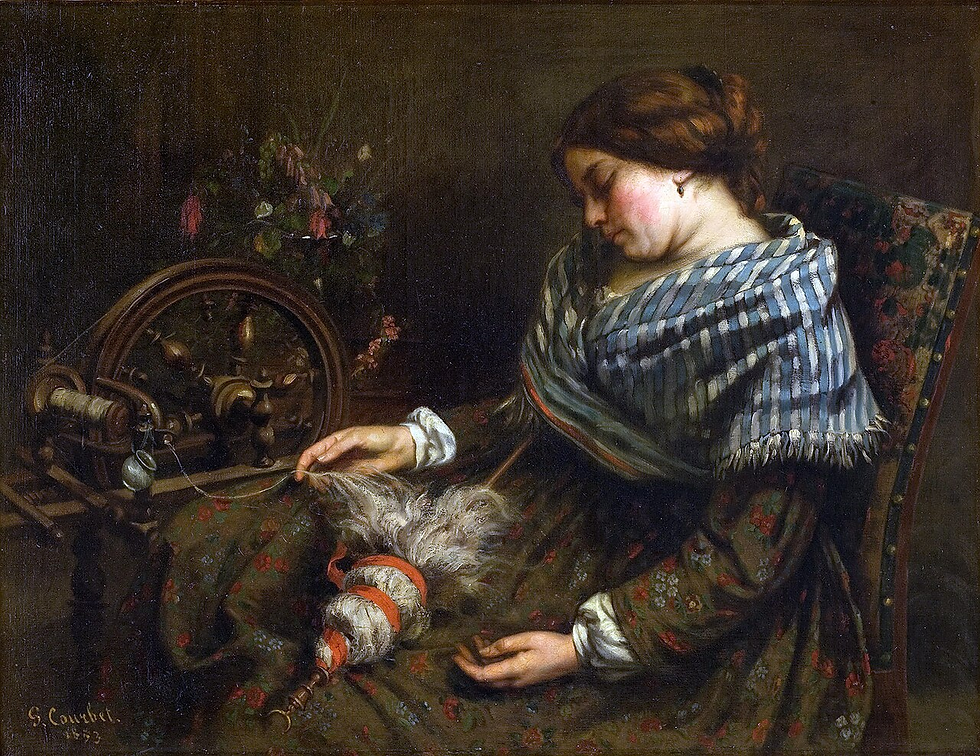
Zola viewed this utilitarian approach with utter contempt, describing Proudhon’s art theory as the pinnacle of socialist rudeness—or pignouferie. He compared the theorist's book to a foul privy where every sentence was rubbish. For Zola, an artist who subordinates his work to a social message ceases to be an artist. He mocked Proudhon for caring little whether a moralist moralises with a brush or a broom, arguing that true art relies on temperament and the frank observation of reality, not on the construction of chimeras or educational illusions.
Censorship and the Uniform
Zola’s defence of truth over social propriety was best illustrated in his support of Édouard Manet’s The Execution of Maximilian. The imperial censors had banned Manet from printing a lithograph of the execution, fearing a political scandal. Zola, writing in La Tribune, feigned confusion at this severity. He noted that a cheap penny print from the Epinal workshops, depicting the same execution with terrifying naiveté, was freely available in shop windows.

Zola ironically concluded that the censored realism of Manet was punished not for the subject, but for its accuracy. While fanciful artists dressed the executioners in costumes from comic opera, Manet, who loved the truth, had drawn the soldiers in their real uniforms, which happened to be almost identical to the French Vincennes infantry. By painting the reality that it was French troops (symbolically) shooting the Emperor, Manet had committed the crime of being too realistic: Napoleon III was indeed partly responsible for this disaster. Zola quipped that the censors had credited Manet with a biting epigram that the artist had simply achieved through faithful observation. Manet did indeed work from photographs, even if these photographs may have been pure photomontages.
The Hypocrisy of Eclecticism
While Zola championed the dangerous reality of Manet, he mercilessly mocked the safe, eclectic art favoured by the establishment. In 1868, he ridiculed a sculpture of Venus by Émile Thomas, which had been praised for combining the Attic form, the grace of Louis XV, and the breadth of the Renaissance. Zola mocked this sculpture by noting that such a Venus was a monster designed to satisfy every type of libertine.
He joked that a collector owning such a statue could imagine himself as Alcibiades, François I, and Louis XV all at once, enjoying a trinity of libertinage. He was particularly amused by the description of the goddess undressing for Mars. Zola pointed out the hypocrisy of the tunic which, suspended between the curious onlooker and the divine outline, served only to hinder the gaze and incite a more bitter desire. For Zola, this was the ultimate failure of academic art: a calculated, eroticised mishmash he loved to compare to vanilla cream and sweet shop's treats that pretended to be classical, standing in stark contrast to the raw, physiological truth he sought in the laboratory of the modern novel and that before all he had recognized in Manet'ss Olympia.
This blog is based on the anthologies of primary sources edited by Art d'Histoire Academy. Find the complete academic references in:
You can also find these themes covered in the free videos on the Art d'Histoire website.
We believe in making academic art history accessible and reliable for everyone.
The Art d’Histoire Academy platform specialises in primary sources and digitised archives, covering French art history from 1850 to 1910.
It offers clear, structured, interactive videos, as well as a library of over a thousand articles that explain and contextualise primary sources.
Whether you are preparing for an exam, exhibition or publication, the Art d’Histoire Academy will support you.


