
Realism : Flaubert, Balzac, Zola, Champfleury and the Hatred Myth of Literary Photography
- Art d'Histoire
- Feb 19
- 5 min read

In the mid-19th century, a profound shift occurred in the way writers approached their craft. The novelist was no longer merely a storyteller weaving fables, but a scientist examining the social fabric with the cold precision of a surgeon. This era, dominated by the rise of positivism, saw the pen transform into a scalpel. Writers like Honoré de Balzac and later Gustave Flaubert or Émile Zola did not seek to invent, but to verify, borrowing their methods from the anatomist, the chemist, and the naturalist to diagnose the ailments of the modern world.
The Social Laboratory

The precursor to this scientific approach was Honoré de Balzac, who explicitly conceptualised his work as a form of moral chemistry. Balzac viewed society through the lens of a naturalist, arguing that social species—the soldier, the lawyer, the idler, the scholar, the statesman, and even the pauper—were as distinct and permanent as the zoological species defined by Buffon. In his foreword to The Human Comedy, he positioned himself as a doctor of social sciences, treating his novels as a vast laboratory where he could dissect the entrails of society.
This call of scientism was not lost on Gustave Flaubert. Raised in the enclosed world of the Rouen hospital where his father was chief surgeon, Flaubert grew up surrounded by the realities of the flesh rather than the supernatural. His library contained the complete works of Buffon, and his early writings, such as Quidquid volueris, reveal a deep fascination with natural history and the transformist debates of Lamarck. Zola himself described himself as a doctor : 'With a scalpel in my hand, I perform an autopsy on a newborn baby’ For these writers, the description of a character was not a poetic flight of fancy, but a comparative moral anatomy, akin to studying a specimen under a microscope.
Arsenic and Old Scores
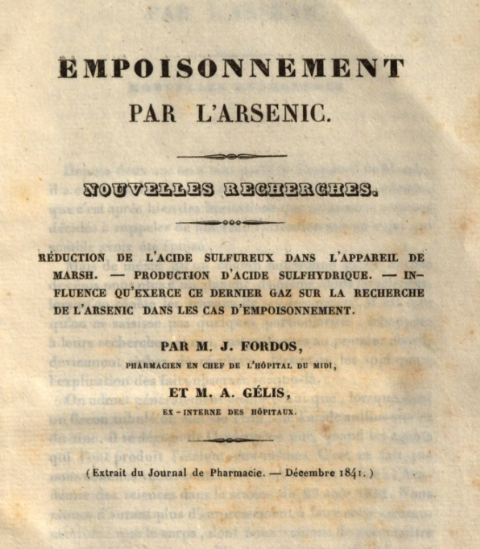
Flaubert’s commitment to medical accuracy reached its zenith in Madame Bovary, particularly in the harrowing description of Emma’s suicide. Far from being a melodramatic invention, the scene was the result of rigorous research. In 1854, Flaubert wrote to his friend Louis Bouilhet that he needed to go to Rouen to obtain specific verifications regarding arsenic poisoning.
The resulting text parallels the clinical observations of Dr Ambroise Tardieu so closely that one can match Emma’s symptoms—the sharp sensation of heat in the throat, the burning thirst, the icy chill creeping from her feet to her heart, and the unequal, imperceptible pulse—directly to medical textbooks of the time. Critics have noted that while Flaubert allowed himself some artistic license, omitting the characteristic brown diarrhoea to suit the narrative, he likely drew upon his own traumatic memory of a mercury poisoning incident in 1854 to describe the visceral sensation of the white sediment sticking to the throat and the terrified coldness of the extremities.
The Daguerreotype Insult
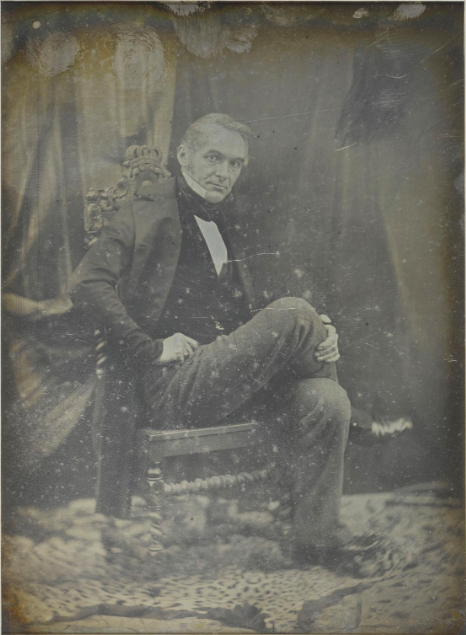
However, this obsession with precision led to a fierce critical backlash. As the technology of photography emerged, critics began to use it as a weapon against the Realist writers, accusing them of being mere chemists and literary daguerreotypists. In 1857, the critic Alfred-Auguste Cuvillier-Fleury attacked Flaubert, claiming that he had trained his lens on a village in Normandy to produce a picture of unquestionable truth—a dull, pale truth—but devoid of poetry or ideals.
This comparison was intended to be derogatory. In the heated debate, detractors argued that the realist artist reduced himself to a machine, flattening his intellect into a mirror that reflected everything, including the manure, without conscience or choice.
They claimed that the daguerreotype, like the realist novel, delivered gawking idiots stuck on a silver plate rather than art. Mérimée, who ironically had directed a state commission for the photographic documentation of monuments in 1851, resented this comparison deeply. He retorted that the label of daguerreotypist was an insult, rejecting the idea that his work was a mindless mechanical reproduction of the world.
The Transparency Debate

The core of the conflict lay in the definition of art itself. Critics like Hippolyte Taine argued that if exact imitation were the supreme goal, then the shorthand of a court trial would be the greatest literature. Defending the movement against the accusation of being a blind man carrying a mirror, supporters like Champfleury argued that man is not a machine. He insisted that the novelist selects, distributes, and frames reality, whereas nature offers no such coordination.
Even those sympathetic to realism, like Francis Wey, warned that absolute reality is rarely flattering and must be disguised. The fear was that the artist, by becoming a transparent instrument, would abnegate his intelligence. Yet, writers like Champfleury maintained that even while transcribing nature, the artist inevitably interprets it through the law of his own ego, making the accusation of mechanical copying a misunderstanding of the realist's intent.
The Hatred of Realism

Despite being hailed as the pontiff of the new school, Flaubert maintained a paradoxical relationship with the movement he helped define. In his private correspondence, he was unequivocal: I hate realism, he wrote! He confessed to George Sand that he had written Madame Bovary out of a hatred for reality, not a love for it. For Flaubert, the mania of his contemporaries to believe they had discovered nature was exasperating. For the same reason, he also detested being photographed: to avoid propagating a realistic image of himself to his readers and critics.
He argued that material truth was merely a stepping stone to rise higher, toward a poetic beauty that transcended the facts. This elitism extended to his political views as well. Flaubert was a staunch opponent of universal suffrage, which he viewed as the rule of numbers over intelligence. Influenced by his readings of Ernst Haeckel, he feared that humanitarianism was leading to the survival of infected stock through medical selection, and advocated instead for a legitimate aristocracy of Mandarins—men of science and letters who possessed the knowledge to lead a society he increasingly viewed as degenerate.
This blog is based on the anthologies of primary sources edited by Art d'Histoire Academy. Find the complete academic references in:
Watch our four free videos on the Art d'Histoire website:
We believe in making academic art history accessible and reliable for everyone.
The Art d’Histoire Academy platform specialises in primary sources and digitised archives, covering French art history from 1850 to 1910.
It offers clear, structured, interactive videos, as well as a library of over a thousand articles that explain and contextualise primary sources.
Whether you are preparing for an exam, exhibition or publication, the Art d’Histoire Academy will support you.


